
GAMSAT Exam Guide: How to Study for GAMSAT & Effective GAMSAT Preparation
So you've decided to sit the dreaded GAMSAT. Congratulations, that's the first step towards becoming a doctor or dentist. I won't lie, it's a tough exam, arguably tougher than anything you'll face in med school. This guide covers how the exam is set out, how to prepare, and what I think works best.
How the GAMSAT is set out
The GAMSAT has three sections:
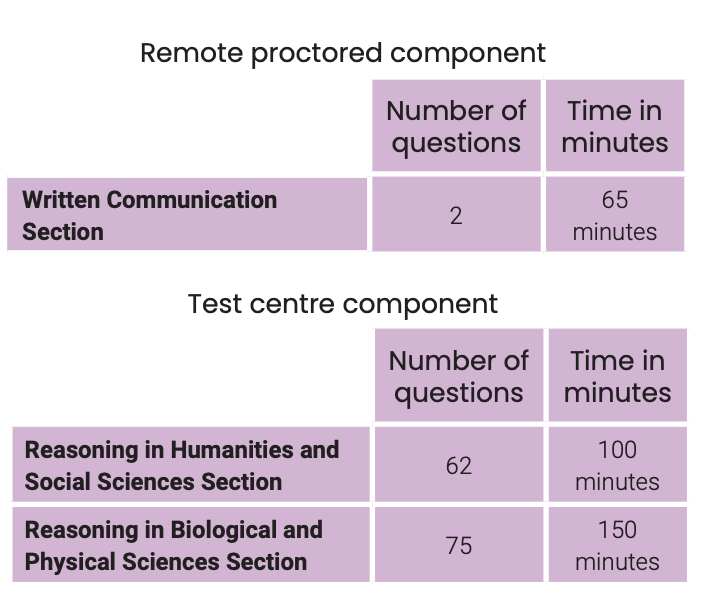
- Section 1: Reasoning in Humanities and Social Sciences
- Section 2: Written Communication
- Section 3: Reasoning in Biological and Physical Sciences
Sections 1 and 3 both test logical reasoning, just in different settings: one in the humanities and one in the sciences. Keeping that in mind helps when you're planning your study.
Where the GAMSAT fits into your application
How much the GAMSAT counts depends on the university:
- Some universities use the GAMSAT as their only entry criterion.
- Others look at it alongside your GPA, CASPer or an interview.
Whichever way you're applying, a strong GAMSAT score is essential for a competitive application to medicine or dentistry.
How to study for the GAMSAT
"How should I study for the GAMSAT?" is one of the questions I get asked most. It depends on your background, how many times you plan to sit it, and where you're at in the application process.
This is the approach I'd take:
- Do your research. Read GAMSAT blogs, search online and go through the official GAMSAT information booklet.
- Sit an ACER practice test under exam conditions. Do all three sections, with no phone, no Google and no calculator.
- Mark it and look at your results. Use my YouTube walkthroughs for Section 1, and for Section 2 get feedback from family, friends or my free essay marking. Working out your actual GAMSAT score is harder, because it isn't as simple as 60% in Section 1 equalling a score of 60. Your score is based on how you compare to everyone else, not your raw mark. Your raw mark will still give you a good idea of where you stand, though.
- Find your weak spots. Work out whether your mistakes come from gaps in knowledge (like organic chemistry), vocabulary or maths. Practising your weak areas regularly is the key.
- Make a study plan. Focus on your weaknesses, set weekly goals and schedule practice papers so you can track your progress.
The best resources for GAMSAT prep
I'm obviously biased here, because I've spent hundreds of hours making my free and paid resources. Putting that aside, though, I think the best resources are, and always will be, the ACER practice papers. Yes, even over my own practice questions and tests.
Once you've done those, move on to the Des O'Neill questions. They're mainly useful for Section 1, as I don't think their Section 3 questions are as relevant anymore. After that, work out exactly what you need:
- Feeling lost and need someone to keep you accountable? Private or group tutoring might help.
- Want a structured approach? A course can guide you through it.
- Just need more practice? Extra question banks and essay marking can help.
How many times should you sit the GAMSAT?
The simple answer is as many times as it takes to get in. Entry scores change every year depending on how competitive the applicants are, so my advice is to keep sitting it until you get into medicine or dentistry. Some students get the score they need first time, but in my experience three attempts is about average, and I've had students sit it up to ten times before they got their score.
Getting support while you prepare
You don't have to do the GAMSAT alone. If you'd like guidance, essay marking or advice on how to study, email me at hello@gamsattutorials.org.
Preparing for the GAMSAT?